
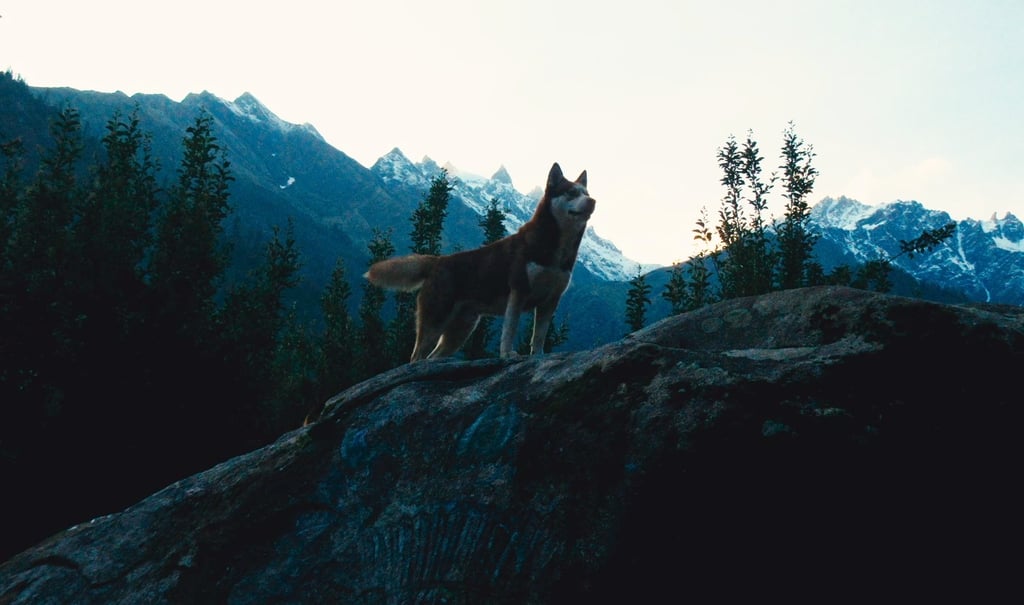
Image Credits: Look at the Ears by Arun
Can Young Indian Creators Say No to Algorithms?
A version of this essay was first published in the Deccan Herald on 12 July 2026. Here's the pdf and the website link.
It’s time to focus on how we can sustain creative practices within an online world that we’re clearly not leaving soon.
There’s a kind of lethargy I experience when I hear one of the most spoken truths of our times, which is that “algorithms are rapidly melting our brains and creativity.” We know that our experience of the internet is overrun by machine curators whose only goal is our attention. We, the participants, are also busy perfecting our grids, making brands out of ourselves, producing content that is more polished than grains at grocery stores—all to please the algorithm lords. Even if we put our energy towards discussions on going analogue, reducing screen time, paying attention, “articles to read instead of doomscrolling,” the unspoken truth is that we don’t seem to be leaving these apps anytime soon. So how do we spend our time here without letting the tech giants snatch our creativity?
The birth of the internet had led to democratisation of expression and creativity—one didn’t need to knock at a gallery’s door or please an authoritative voice to showcase their work anymore. You can form connections with anyone around the world to build a community of your shared interests. The internet was treated as a place more for thought rather than performance, where discovery was intentional and not based on algorithms. Today, we have lost the plot. Discoveries are endless, confusing and noisy. Connections are momentary, louder and polarised. Performance is prioritized and optimized. And creativity is struggling to come to the surface.
Cultural theorist Matt Klein has famously said, “There's this weird thing that's happening where amongst creative surplus, we have creative stagnation.” Creativity has become stagnant because our algorithms are built to create and feed us sameness through trends, keep us in silos, give us incentives to perform and fixate us on the platform instead of focusing on content that is rewarding. Cognitive psychologist, Raksha Singh, explains that this shift has happened because once a system is commoditized, like right now, then the focus also shifts to the valuation of your expression.
But we have had enough of repetitive discussion on all of these paramount concerns. Daily headlines have pierced our brains and presented an autopsy, declaring a post-literate age, an age where most of society can't pay attention, focus or construct a thought. It’s the age of slop content. Even though we are disenchanted with most of the content today, we are willingly consuming and creating it.
However, throughout history, disenchantment has given rise to counter cultures. Under the mainstream, in all art forms, counters slowly brew from boredom, as a response to the saturated, safe and easily profitable content. It happens when the disenchanted creates without permissions, guidelines or audiences in mind. The boredom of mainstream content has similarly also brought a new wave of Indian creators who are pushing back against algorithms, tending their profiles instead of curating, crafting a creative community, and showing us new ways of self-expression on social media. Their work often defies categories, removes virality from the center, and somehow still manages to find an audience.
Take Satyam Paul (@stympaul), 23, for example. He talks about movies, makes short films, leads photowalks, shows the textures of his room, films casual hangouts, and even sometimes muses on chairs and plates—all in a storytelling style that feels refreshingly different from the usual audience-focused content online.
Explaining why he posts a “random” mix instead of a specific niche, he says, “I want an internet where normal people are doing normal things” and normality arrives when you capture different moments without following a specific pattern. He feels Instagram has become too polished and manufactured for attention, making normality feel rare.
“I like to stop and record small moments on the street,” says Satyam. “Then I go home, write about them, maybe make a video. It's a wholesome process for me. I just want to put out genuine things that people can connect with, instead of being boxed for a few likes.”
Arun (@arun_5.5), 20, also believes that “creativity is killed when you associate any kind of number with it.” Through his account, he narrates why he likes sad music, why he would travel 600kms for a Peter Cat Recording Company concert and never for something produced by AI and discusses our online consumption habits. His advice to anyone making content is that one should aim to “become a Gawx and not a Mr. Beast; both of them are wildly successful at what they do but they have very different approaches.” Arun thinks that the advent of AI will bring back the respect for effort. “If a creator has put 10 hours into making a video which could be made by a prompt in 5 seconds, people will form a better connection with the creator even if their videos are imperfect because of the genuine visibility of effort. My theory is that people will pay a premium for handmade videos like they do now for handmade objects.”
Jstore (Janhavi Ghai), a follower, feels such content is working and gaining attention because people have reached a saturation point when it comes to instagram. She also adds that “the rules of algorithms are really hard to decipher and once you do they change the rules.” Instagram regularly updates its algorithm’s motifs to adapt changing user behaviour and maximise their time spent on the platform. Ghai argues that people have realised that it's better to stop constantly fixating on what will work and rather just put that much energy into creation.
Another creator, Kabir Chatterjee (@03kabirr), 23, also believes that “Instagram has, on the one hand, changed the way we value art: I feel like we still value creativity, but there’s been a move away from appreciating free-flowing creativity in and of itself,” he says, “towards judging how well a piece of art echoes what we already like to see, hear, and believe.” However, he adds, “We just need to consistently make things that we want to make, things that we would like to see, and allow it to find its people.” Rohan Mukherjee, a social commentator and creator, also says “the communities that form around more thoughtful content are smaller and way more alive. People show up differently when they feel like they're part of something being built rather than just consuming a feed.” He says that the trick is to start treating the algorithm like weather instead of a boss. You can't control the weather, but you can dress for it. He further explains that “the creators who seem to be doing something real aren't optimising for reach first, they're optimising for ‘would I actually want to see this?’ first. Curiosity is a terrible content strategy and a great creative one. And weirdly, that tends to find its people anyway.”
But it’s not realistic to believe that numbers will never impact your decisions, says Aria Sebastian (@ariasebastian), 22. On her account, you’ll find videos on the pressures of saying something profound while standing in front of an artwork, about imposter syndrome, poetic notes on riding a bus during rainfall and on collecting stickers. She says “I have really tried to loosen the reins that numbers have had on my creative output…but what I’ve found makes it easier is letting go of expectations, at least during the process of creating. There is a pride in being fueled by your own passion and not by other people’s approval.”
One might say we should altogether go off these apps to pursue creativity, that when the ethos of the system is not in our favour, we should quit it. That when the industrial revolution happened, the Romantic movement rejected it by going out, writing poetry, experiencing what nature has to offer. Singh had an interesting perspective on this: “The argument that a creative person can just create in private and it should be enough does not consider that a very strong component of creativity is also that we often want it to have a larger output than the act itself.” We would want it to be witnessed and shared. Unless you are in one of those isolated gallery art chambers, social media apps, despite their false systems, have become the easiest way for self expression, internalised over the years.
Thus creators are trying to negotiate with the system. “Instagram, like everything else, imposes constraints, and as much as we love talking about how art needs to be boundless and free, often the best art comes out of constraints and limitations, e.g., many countries under dictatorship having a flourishing underground art culture,” says writer and commentator Amritesh Mukherjee.
But it is not that easy to resist the masses. Singh says that the creator’s desire to create has to be very strong to break the norm with a combination of a few things like courage or resilience. To keep on creating without a need of large validation requires a lot of commitment, basic psychological strengths and a growth oriented outlook. You have to build respect for individuality at the cost of popularity. These are trade-offs that creators actively have to make.
This sort of intentionality is rarely taught when you enter the space of content creation. There are obvious reasons for this. Intentionality acts not on the premise of scale, optimisation and virality but it becomes about sustaining a network of creation and connection. Creators like Satyam, Aria, Arun and Kabir are practicing a sense of intentionality and tending. They practice a sense of grounding and care for their accounts with a curation for their own interests. Under the tip of mainstream content, a barrage of human accounts are practicing tending, plowing their online farm with intentional creativity. They remind us that we need to sometimes live on the internet instead of letting it consume us.
Perhaps it is possible to create a meaningful relationship with the internet then with one’s tiny decisions. Social media amplifies shallow content because we shifted our focus to thrills, bigger numbers and fast ideas. If used rightly, it possesses the power to make complicated nuances, ideas and creative thoughts travel further, which is what every creative desires. You perhaps don’t necessarily need to quit social media to live a creative life. You need to enter it differently. The future of the internet doesn’t belong to the loudest one in the room but to the one who is slowly bringing intentionality and tenderness.